 Old Lake Cottage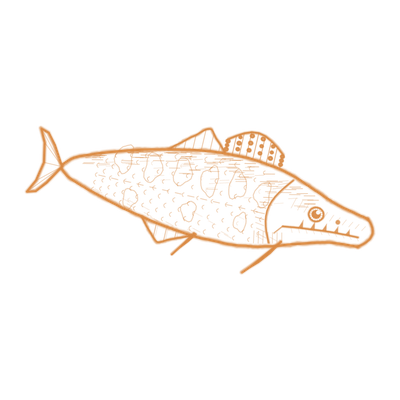
Sauger fishing in Canada
Sander canadensis
- Documented at
- 23,371 waters
- Primary species at
- 0 waters
- Ideal water temp
- 18°C
- Active range
- 13–21°C
Best sauger waters today
Scored for 2026-09-15 from live weather, water temperature and this species’ own thermal range.
- Alfred Moore Lake (Nelson House 170)74
- Awasawukaw Lake (Sandy Bay - Wapaskokimaw 202)74
- Bushell Lake (Sandy Bay - Wapaskokimaw 202)74
- Butt Lake (Arviat)74
- Cassells Lake (Nelson House 170)74
- Albert Taylor Lake (Nelson House 170)73
- Alexander Watt Lake (Arviat)73
- Ashton Lake (Nelson House 170)73
- Bagg Lake (Nelson House 170)73
- Bowton Lake (Arviat)73
How to fish for sauger
Sauger are walleye's close relative and are targeted almost identically - the same jig-and-minnow presentations, the same low-light feeding habits, the same relationship to bottom structure - so an angler comfortable with walleye already knows how to catch sauger. The practical differences worth knowing: sauger tolerate current and turbid, silty water better than walleye, so they're often the dominant fish in large rivers and their tailwaters, and they tend to run smaller. In flowing water, vertical jigging along channel edges and drifting a jig-and-minnow through current seams and the slower water below wing dams and rock structure are the standard, productive approaches. Sauger are distinguished from walleye by dark saddle-shaped blotches on the body and spots on the spiny dorsal fin (walleye lack both) - worth being able to tell apart, since regulations sometimes differ between the two and hybrids ('saugeye') occur. Like walleye, they feed most actively in low light and stained water, so an overcast day or a bit of current-driven turbidity often improves the bite.